Tired of pilot projects that never go anywhere?
After the success of Canada’s first Climate Ready School, we’re ready to scale this model across the country.
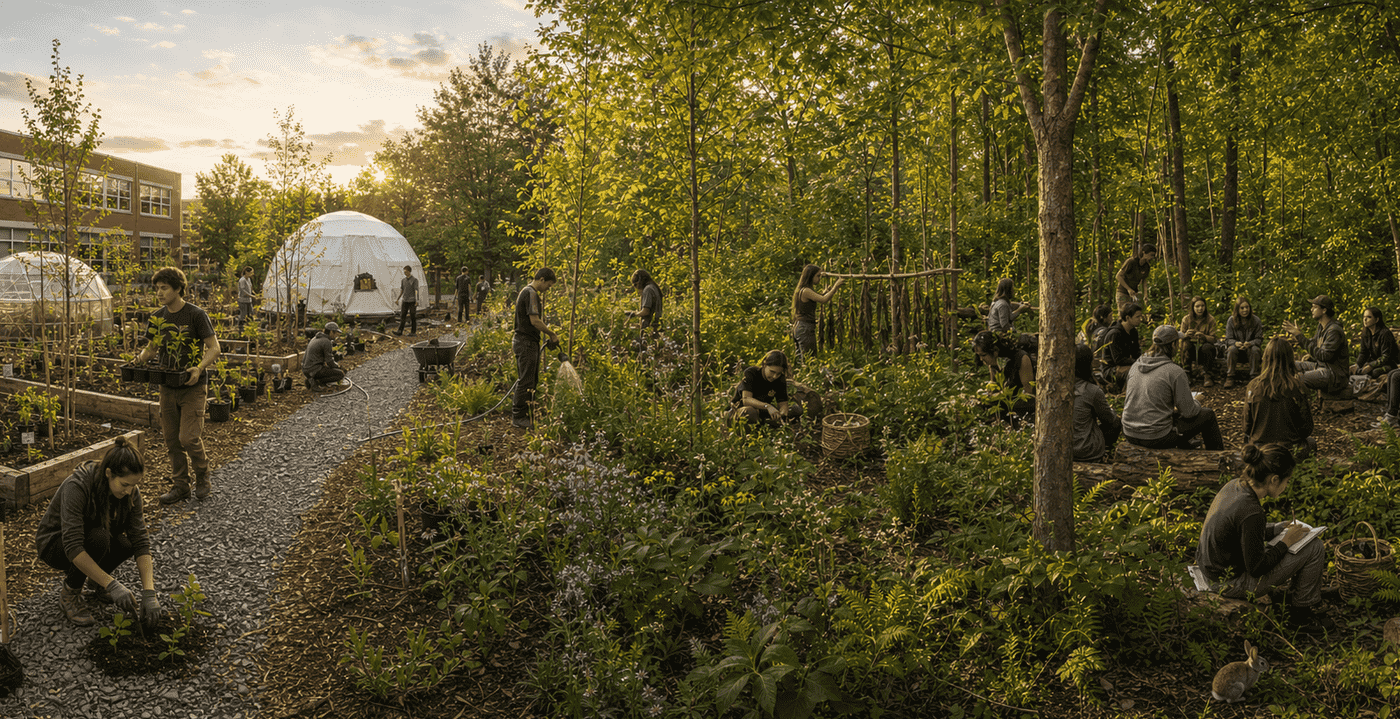
The pilot project at Irma Coulson Public School in Milton, Ontario set new standards in stormwater management, topography, vegetated landscapes, material usage, retainment, seating and outdoor learning. It also delivered significant benefits for students, teachers and the broader community.
Evergreen is expanding the Climate Ready Schools program with new full-scale projects, including Limestone School of Community Education, in Kingston, Ontario and O.V. Jewitt Community School in Winnipeg, Manitoba.
At the heart of these projects are nature-based solutions that help schools adapt to climate change while supporting biodiversity and wellbeing.
“We talk about it more in the context of land relations and the significance of non-human beings,” says Terence Radford, an award-winning Métis landscape architect and Evergreen Design Consultant for the Limestone School of Community Education project. “Serving human needs and non-human needs, which includes the water, plants, animals, soil. It’s integral to every aspect of the work we do.”
Read on to see how the Kingston project is taking shape, and how the concept of Placekeeping is informing the work.
Designing for human and non-human needs
The Limestone School of Community Education offers a mix of independent and group learning with hands-on and community connected opportunities to Indigenous and non-Indigenous students.
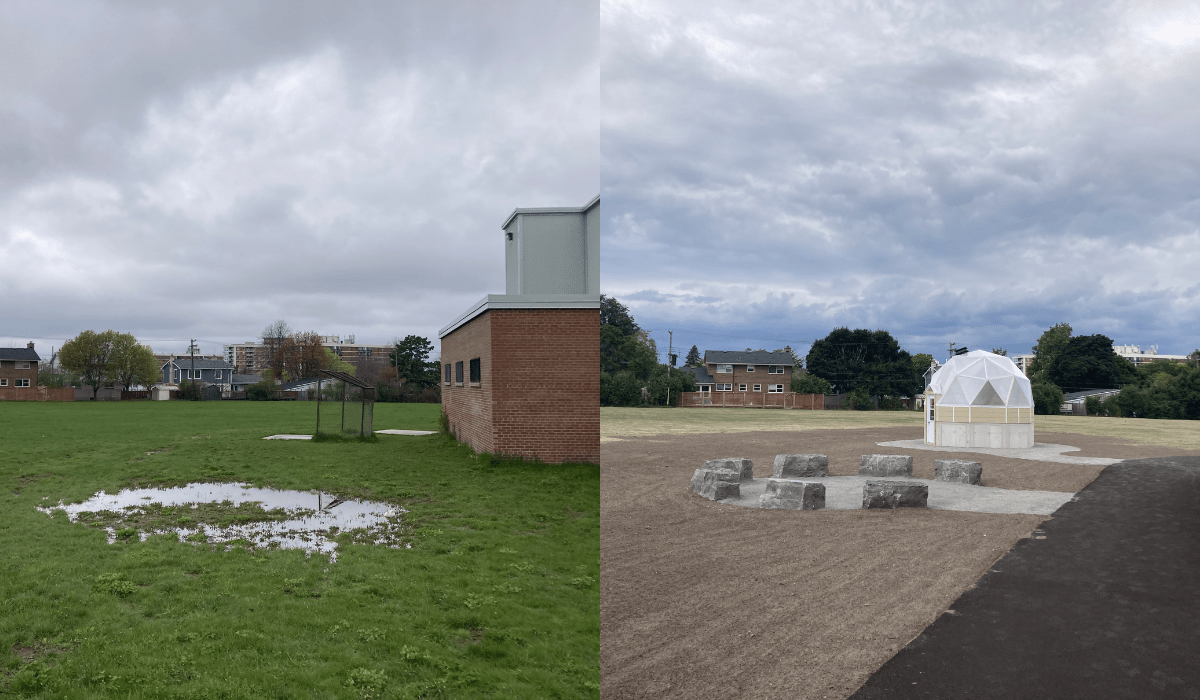
Located along the shores of Lake Ontario, this site has recently suffered the impacts of rising water levels—so much so that the field is often unusable during spring.
“This project was prompted because there was a request to install a teepee and fire areas,” Radford explains. “Because of the drainage issues on site, we couldn’t build the infrastructure to allow for that programming to be installed.”
What started as a plan to deal with drainage on site turned into a Climate Ready School master plan.
“It’s that very typical school ground typology; it’s a big open field surrounded by a chain link fence, no paths, a giant asphalt parking lot and not a single tree in the back area.”
In response, the landscape design introduces a series of interventions across the site, including:
Rebuilding a natural ecological system: The design restores a more complete ecological system across the school grounds, using a mix of trees, shrubs, perennials and groundcovers. The approach prioritizes species with cultural, ecological and practical value—including food and medicinal plants used in teaching and land-based learning.
Rain gardens: Shallow, planted landscape areas designed to capture and temporarily hold rainwater. They help slow down runoff, reduce pressure on drainage systems and allow water to naturally filter back into the ground.
Bioswales: Vegetated, gently shaped channels that guide and absorb stormwater as it moves across the site. Planted with water-loving and native species, they help direct drainage intentionally while improving infiltration.
Planting for learning and use: Beyond ecological benefits, the planting design will support how the site is used for learning and cultural practice. Trees and shrubs create shade and privacy in spaces like the sweat lodge, where vegetation helps create a sense of safety and separation from nearby residential backyards and the broader school environment.
Transformation guided by Placekeeping
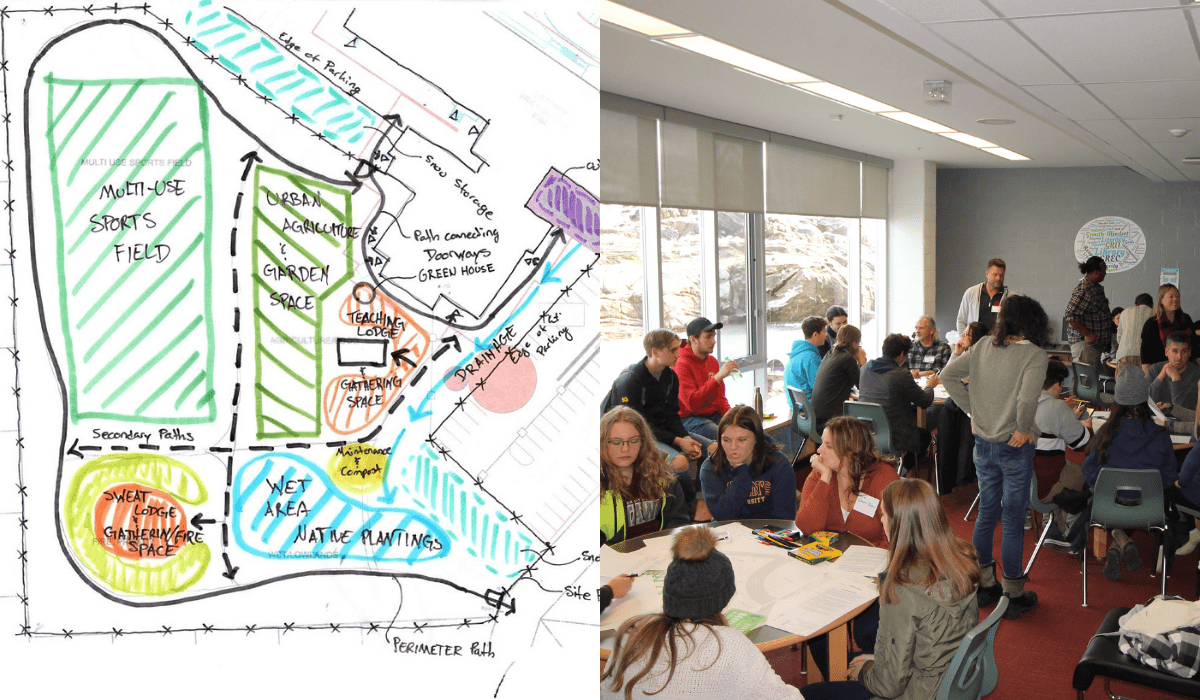
The school ground transformation aims to create a space where cultural heritage, practical skills and sustainable practices come together. During the community engagement phase of the project, the team heard that spaces for cultural connection and expression were missing at the site.
“When it comes to cultural programming, Indigenous teachings are heavily centered on land and environment,” Radford says. “The whole project is providing really important space for that.”
The spaces, beyond the Sweat Lodge, also include a Learning Forest, Teaching Lodge, Ceremonial Fire Pit and a variety of gathering areas. Radford says these spaces play a role in building existing partnerships and allowing the school to become an Indigenous hub for the entire school board.
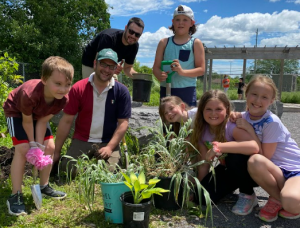
The entire project is rooted in the concept of Placekeeping, which Radford describes as understanding a place before changing it. That meant looking back at the site’s history and ecology to understand what existed before the school and surrounding development were built.
“A lot of our work is situated in research, especially looking at maps and looking at the regions that we’re working in pre-colonization in order to understand what’s there,” he says.
That understanding shaped everything from the planting strategy to the site’s approach to water management. Rather than directing stormwater away through traditional infrastructure, the design works with the site’s natural topography and hydrology, creating rain gardens, gathering spaces and recreation areas that respond to the landscape instead of fighting against it.
“We’re allowing [the land] to lead and we’re honouring that place,” says Radford. “We’re doing Placekeeping by working with that site rather than trying to fight it.”
This project has been graciously supported by RBC and the Peter Gilgan Foundation.
Learn more:
Want to follow the progress on this and future Climate Ready School projects? Make sure you’re subscribed to the Evergreen newsletter for updates, photos, videos and more.
Are you interested in supporting the Climate Ready Schools program? Are you representing a school board interested in your own Climate Ready Schools journey? We’d love to chat! Contact us at climatereadyschools@evergreen.ca.