Due to limited parking availability, please take the Evergreen Shuttle Bus or use Toronto Bike Share this weekend if possible.
Plan your visit
In 2022, Irma Coulson Public School in Milton, Ontario became Canada’s first Climate Ready School. It set new standards in stormwater management, vegetated landscapes, seating and outdoor learning, and delivered real benefits for students, teachers and the community.
Now we’re scaling the model. The Katarokwi Learning Centre in Kingston, Ontario is one of the first full-scale projects in the next phase of our Climate Ready Schools program.
The Katarokwi Learning Centre in Kingston, ON offers Indigenous and non-Indigenous students a mix of independent and group learning, with hands-on, community-connected opportunities. Working with the Limestone District School Board, Evergreen is helping turn its school ground into a place where cultural heritage, practical skills and sustainable practices come together.
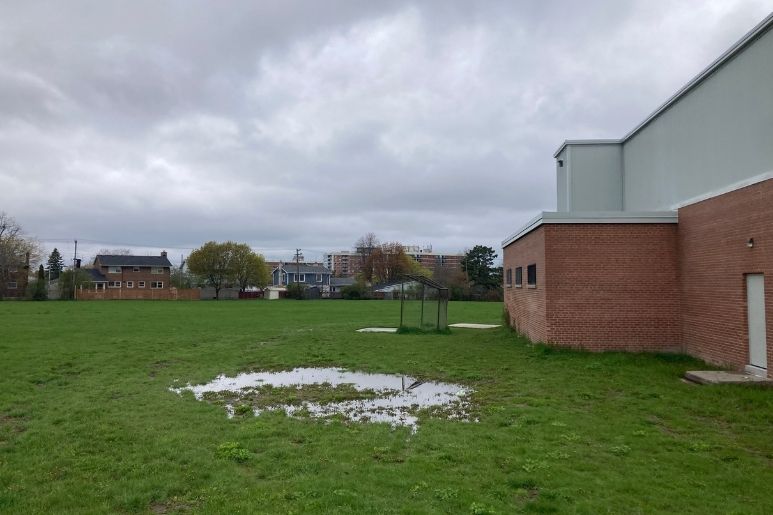
The school sits on the shores of Lake Ontario, where rising water levels often leave the field unusable in spring. The project began with a simple request: space for a teepee and fire areas. Drainage made that impossible to build. What started as a fix for wet ground grew into a full Climate Ready School master plan.
Before we began, the school ground had a familiar layout: a big open field, a chain-link fence, no paths, a large asphalt parking lot and not a single tree in the back area.
Stormwater Management
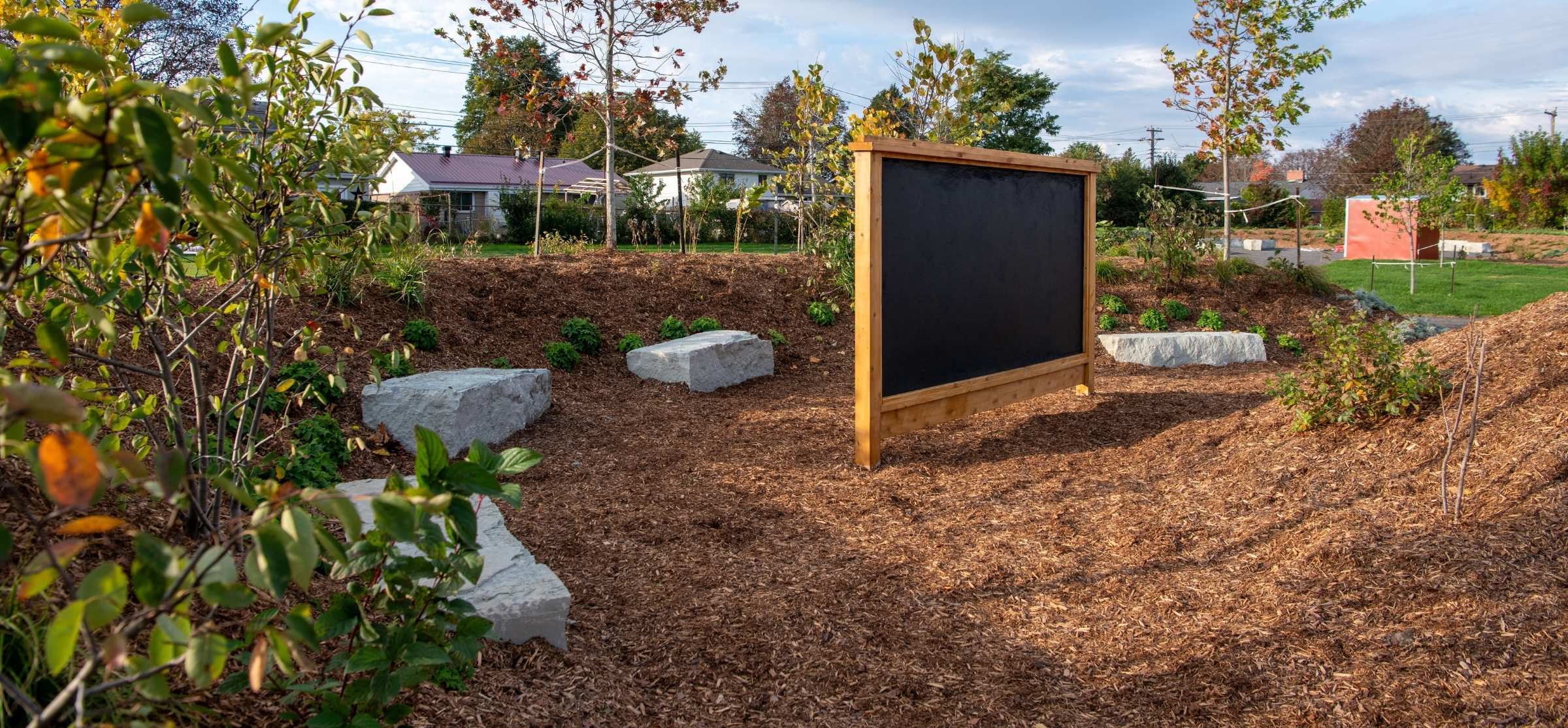
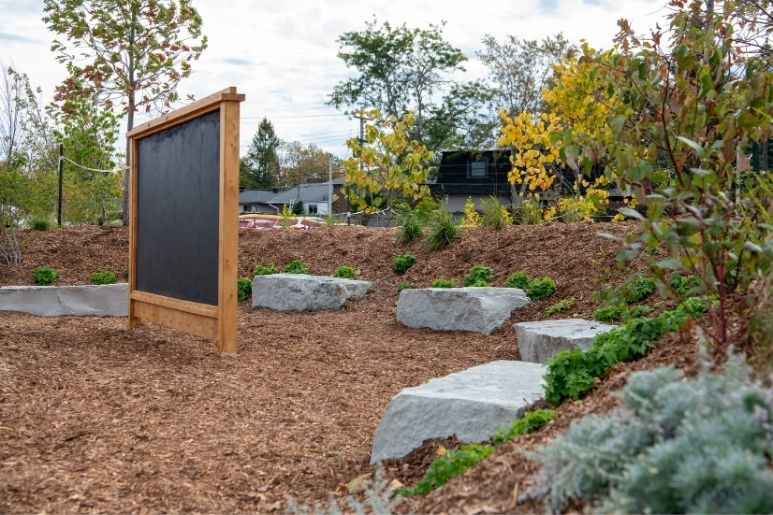
Rising lake levels and poor drainage left the field waterlogged each spring. The design works with the site’s natural topography and hydrology to slow, hold and absorb stormwater, instead of piping it away.
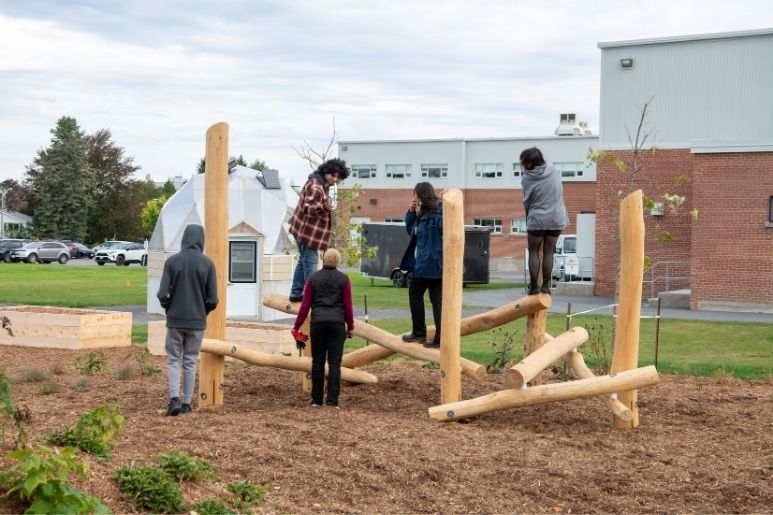
Spaces for Land-based Learning
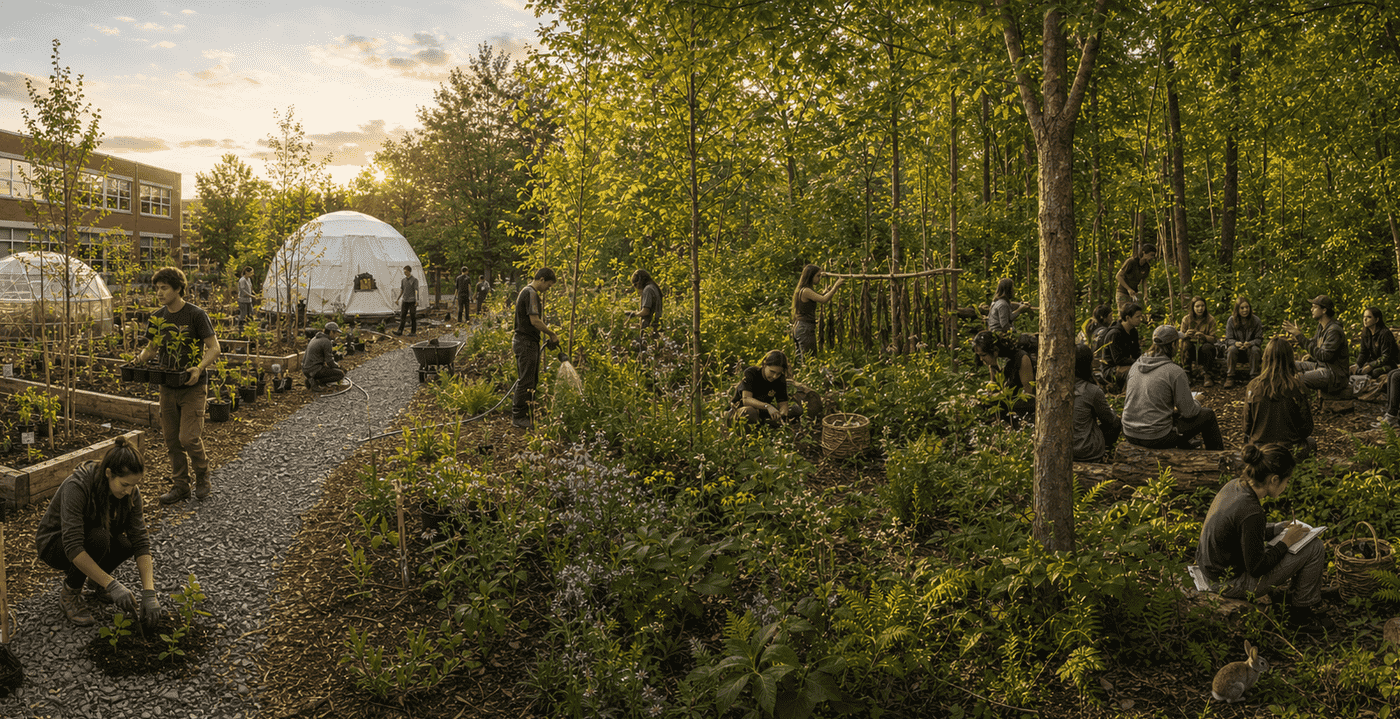
During community engagement, the team heard that spaces for cultural connection and expression were missing. The new design adds dedicated places for Indigenous teachings, ceremony and gathering, so the school can grow as an Indigenous hub for the whole school board.
A complete ecological system
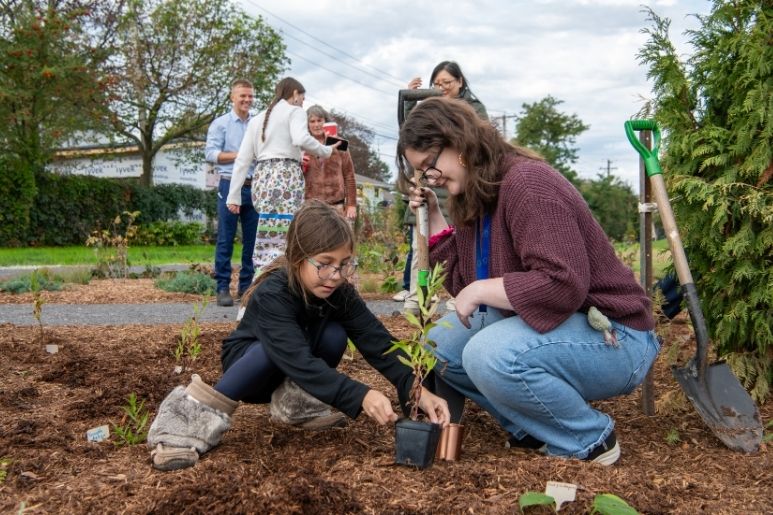
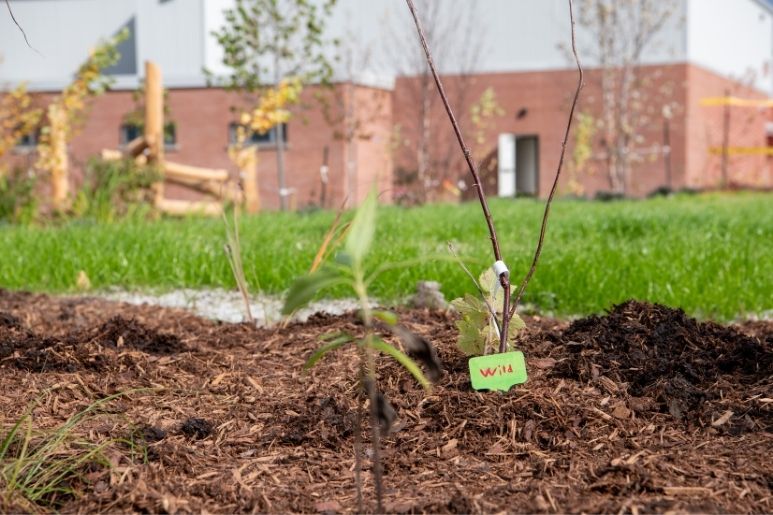
With very little tree cover, the site offered almost no shade or shelter for plants, animals or people. The planting plan rebuilds layers of trees, shrubs, perennials and groundcovers, chosen for their cultural, ecological and practical value.
Evergreen worked with Terence Radford of Trophic Design, an award-winning Métis landscape architect, as Design Consultant for the project. Rooted in land relations, the design brings nature-based solutions to every part of the site, serving human and non-human needs alike: the water, plants, animals and soil.
Support for this program has been provided by Evergreen’s generous community including: RBC, Peter Gilgan Foundation, and the Chisholm Thomson Foundation.
Transforming public spaces like school grounds is a vital step in stewarding the land so that our children and generations to come can live healthy, vibrant lives.