It might seem frivolous to talk about public spaces in the context of a housing crisis. But public spaces are what make dense housing work. They make the dense housing we need into homes where people – and nature – can flourish; into places of community connection, health and recreation, climate resilience, and local economic activity. Public spaces aren’t peripheral to housing delivery; they are essential housing-enabling infrastructure. And they are a powerful force multiplier, bringing us together in common purpose to enable better solutions.
To create the conditions to build more homes that people can afford—quickly and sustainably—we must work together. Across sectors and across the country, we have enormous capacity to make this moment a triumph of collaboration at a national scale, delivering not just more affordable units but communities where people and nature thrive. If density is going to work, and we need it to – to leverage existing infrastructure – then we must invest in better public spaces alongside it.
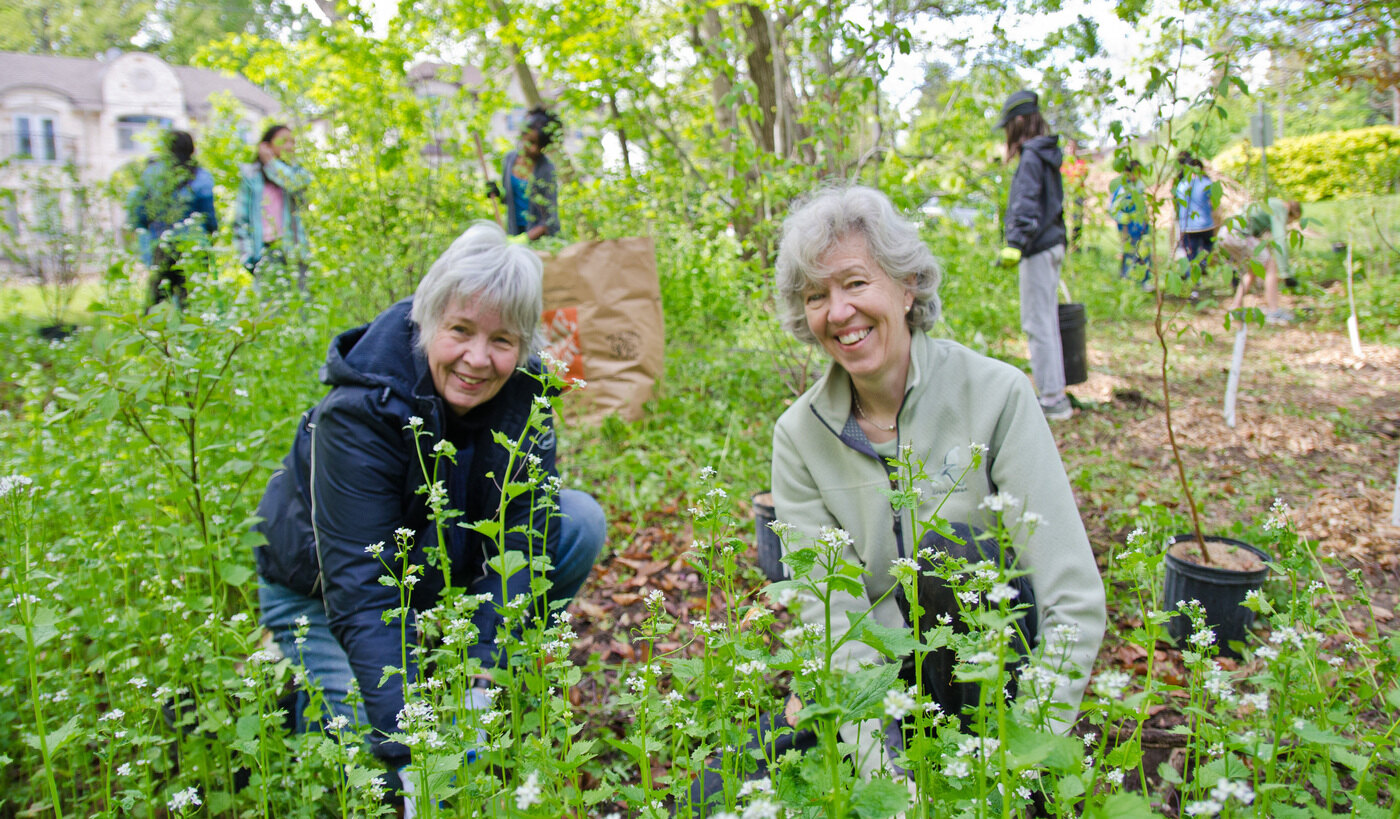
When we build public spaces together, the results are profound. Good public spaces attract diverse communities and generate measurable benefits for health, climate and local economies. Co-created with residents, they reflect the needs and aspirations of the people they serve. Co-created with government, the private sector, Indigenous leaders and community-based organizations, they can mobilize our respective strengths and capacities beyond what scarce municipal (and even federal) budgets can deliver alone.
Research backs up the vital role public spaces play in our communities. Statistics Canada’s analysis of more than 46,000 Canadians across 6,500 neighbourhoods found that access to parks and green space is a strong predictor of life-satisfaction.
For Canadians in the lowest income bracket, access to green space and transit has the greatest impact on wellbeing, but low-income neighbourhoods often have the least access. Sociologist Dr. Eric Klinenberg has shown that good public spaces aren’t just pleasant—they’re life-saving infrastructure, critical for community resilience in the face of natural disasters. Closer to home, Dr. Kate Mulligan’s research demonstrates the outsized impact of social infrastructure on our health and wellbeing. Parks, playgrounds, plazas—even alleys, verges and transit stops—are where belonging and trust take root.
Public spaces are more than social infrastructure. They can also function as green infrastructure, offering nature-based solutions to climate change. They manage stormwater, reduce urban heat, support biodiversity, and even store carbon. As Canadian cities confront flooding, wildfires and heatwaves, integrating these natural systems into housing and infrastructure planning will help protect communities as high performance climate adaptation interventions.
What’s more, thoughtfully designed public spaces help enable housing delivery by building social license. When good public spaces are planned alongside new housing—when intensification feels like something done with communities for their benefit, not to them—people are much more likely to support change. Integrated, community-centred planning reduces resistance and builds the trust that our national housing ambition requires.
We’ve seen firsthand what good public spaces can do at Evergreen Brick Works in Toronto – once a crumbling, post-industrial site, it is now an award-winning sustainable community hub showcasing climate technology, nature-based solutions, hundreds of local artists and entrepreneurs, recreation, urban kids playing and learning outside in nature, and hundreds of annual events delivered with thousands of partners. Public spaces like this are not backdrops to urban life—they are active systems, created by all of us, And we think they are the future of cities. Canada can lead if we raise our expectations of what the places we share can be.
Housing is where we live. Public space is where we live together. If we want to build thriving communities, homes where people can live well, now and in the future, public spaces must be prioritized. They can bring us together in common purpose and care, and ensure the places we call home are bursting with life.