Public spaces are vital to our health and wellbeing. Become a monthly donor today to help build more irresistible public spaces across Canada.
Become a monthly donorPublished on August 19, 2025 by Ethan Rotberg, Senior Communications Specialist | Evergreen
How do you show off your city to out-of-towners?
Maybe it’s a trip to your favourite restaurant, but some of the best places to showcase your city are its public spaces. Think: beaches, historic landmarks, farmers markets or nature trails.
We’re so proud of these spaces because they bring cities to life. To learn more, we talked to Toronto’s Chief Planner and Executive Director of City Planning, Jason Thorne. He says planning spaces to be flexible rather than prescriptive is one of the keys to seeing them bustling with activity — kids climbing on a log, families picnicking or friends just hanging out on a sunny afternoon.
Thorne joined the City of Toronto after spending a decade in Hamilton’s planning department. As chief planner, he oversees the city’s long-term planning and development, focusing on shaping neighbourhoods and public spaces that residents can actively engage with, ensuring the city feels participatory, creative and inclusive.

How can public spaces play a role in making cities more joyful?
Joy should be considered in everything we do in cities, especially in how we design and plan public space.
I think it’s particularly true in a city that’s growing and is urbanized to the extent that Toronto is, where people don’t necessarily have the privilege of private space. Places where they play with their kids, entertain family and friends or celebrate occasions are public spaces. We have to think about public spaces as these opportunities for joy around the city.
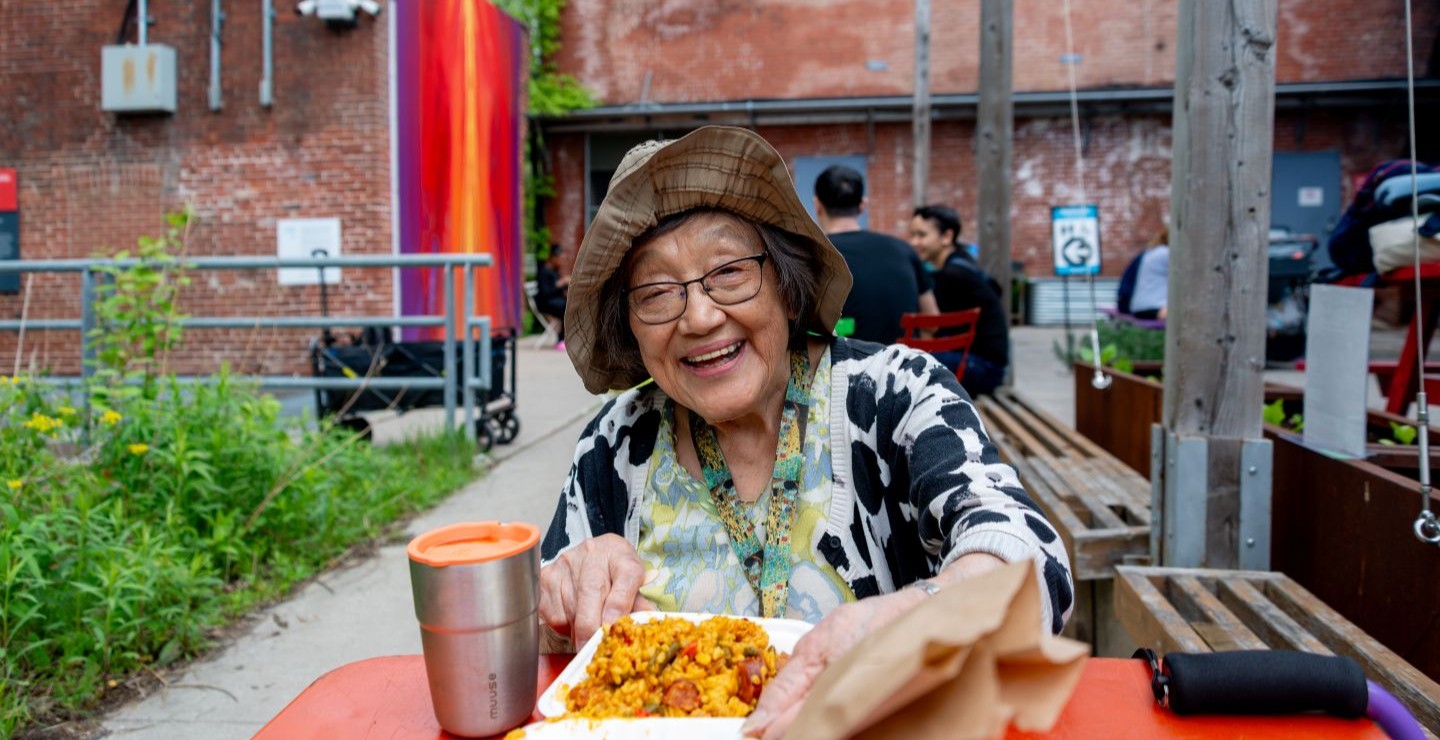
They’re also points of civic pride — places people are proud of in their city. If you have a relative visiting from another part of the world, you want to show your city off. Where do we typically take people? We take them to our waterfront, we take them to the Brick Works, and we take them to these great public spaces because they’re places that give us pride in our city.
From a planning perspective, what can we do to make sure that public spaces are designed to accomplish this?
One of the great things about planning for public spaces is that you’re never entirely sure how people will use them. That’s actually one of the exciting things about them. So, I think you need to plan them to create many different opportunities, not in an overprescribed way where they can only be used for a single purpose.
There’s a saying that the job of a planner is to build the stage upon which others perform. Just like a stage in a theatre, you can imagine any number of different types of performances. We think about public space the same way — how many different and unexpected ways people can use them — and then design a space that makes that possible.
What are some public spaces you’ve worked on or visited that gave you joy?
When I visit other cities, I always seek out public spaces. Sometimes they’re the grand ones — Central Park or the High Line in New York City — but the spaces I tend to appreciate most are the smaller ones, tucked into the nooks and crannies of a city. I love seeing how overlooked or neglected areas can be reimagined, like Evergreen’s transformation of a former industrial site, or The Bentway, one of the best examples I’ve seen anywhere in the world.
In my own work, much of my time in Hamilton was focused on reimagining the waterfront from an industrial zone into a place for people, with new parks, public spaces and connections along the West Harbour. Seeing movie nights, salsa dancing and markets throughout the year in what was once a paved industrial site was incredibly gratifying.
One of my favourite public spaces — often overlooked as part of the public realm — is simply the streets and sidewalks. On a Saturday afternoon, I could walk for hours. For me, it’s less about a picnic in a park and more about strolling along the street.
How do we ensure that everyone (including kids and youth) feels welcome in public spaces?
I would say the best approach is to ask kids and involve them in the design thinking around a space. It’s important to consider people of all ages, abilities and backgrounds, because everyone uses spaces differently.
With kids in particular, the spaces that seem to excite them the most aren’t overly prescribed. Playgrounds and climbing structures are great, but so are opportunities for imagination. Sometimes, you’ll see a really expensive playground, and beside it, a simple log — and the kids will all play on the log. That shows how children bring creativity to whatever they find in a space, and designing with that in mind helps make public spaces more welcoming and engaging for everyone.
If you could snap your fingers and change something about Toronto’s public realm, what would it be?
I’m tempted to say to see more people in public spaces, at more times of day and more days of the year, just doing things and having fun. Although I can’t snap my fingers and do that, there’s a lot we can do as planners to make that happen. What I would see as a measure of success is seeing these places come alive — people throwing a football or having a picnic. When you see a public space and that’s what you see happening, it lifts your spirits.
How can people help make their city more vibrant and joyful?
The first thing people can do is use the city’s public spaces and visit them — that’s what they’re there for. A lot of magic can happen when people come together in public space, and you can’t always predict exactly what it will be.
There are also some phenomenal organizations in the city that create events, festivals, and opportunities for people to meet, gather, and celebrate. On any given weekend in the summer, there’s a wide choice of events, which isn’t typical in many cities and is something we should be proud of. These events exist thanks to the effort of volunteers, often a very small number, and that’s really the richness of the city. Getting involved with these groups helps create more opportunities for people to connect and enjoy the city together.
Learn more
Want to read more interviews with placemaking leaders? The Evergreen newsletter isn’t just another org update — it’s a conversation about the most pressing city-building issues. Subscribe for stories, events, resources, careers and more. You can also join us for the next Evergreen Conference, a gathering of urban thought leaders, community members, private and public sector innovators and city builders from across the country.