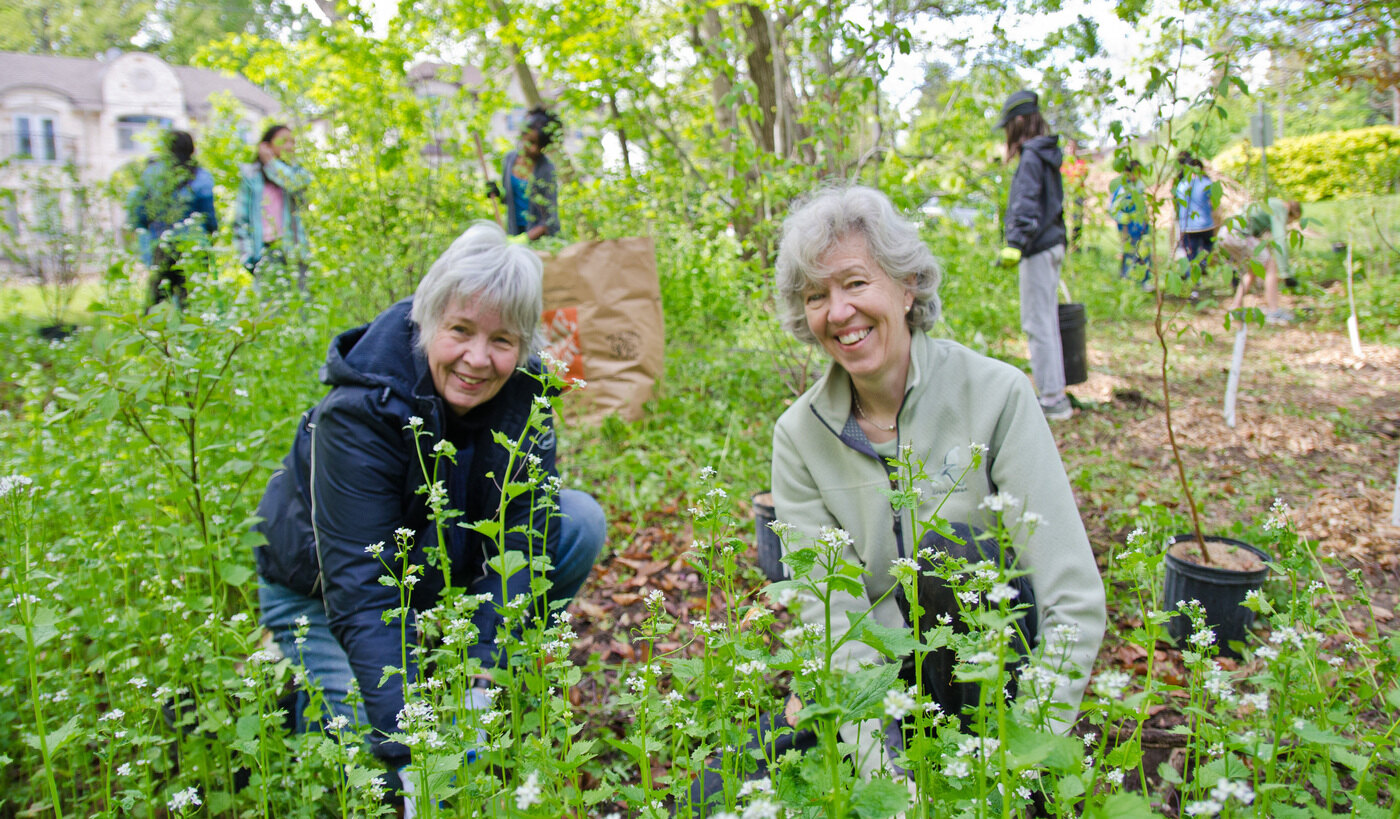
More than half of older adults in Canada say they’re experiencing loneliness.
A new survey published in January by the National Institute on Aging (NIA) also showed that social engagement is actually declining—only 33% of older adults participate in social, recreational or group activities on a weekly basis and 41% participated less than they wanted.
“Studies have repeatedly shown an association between social isolation and/or loneliness and negative consequences for physical and mental health,” according to an NIA report titled Understanding Social Isolation and Loneliness Among Older Canadians and How to Address It.
Community and public spaces can play an important role in helping older adults stay connected, while also accommodating the different abilities, interests and needs that people experience as they age.
To learn more about the importance of strengthening social networks and its effect on ageing in Canada, we spoke to Talia Bronstein, the NIA’s director of policy.

Evergreen: What were the main takeaways from this year’s report?
Talia Bronstein: I think it was that we saw a drop in the level of positive feelings towards ageing, which was surprising because that’s been really steady every year until this one. I think that’s driven by a few different things. It can be people’s material circumstances; can they afford to retire? Can they make ends meet? Do they have access to the services they need?
We also found that 43% [of respondents] were at high risk of social isolation and 57% were experiencing loneliness, and that has not improved at all since 2022. That’s really concerning because social isolation and loneliness can lead to mental health ramifications, but also physical health. Particularly when it comes to older adults, it can actually shorten your lifespan when you’re socially isolated. It’s something we need to be really conscientious about.
Another overarching theme is around ageing in place. We ask people, ‘where do you want to age?’ And the overwhelming majority, 81%, want to age in their home or a smaller home—but still in a private residence. Only 3% want to go into long term care. We use the term ageing in the right place instead, because it’s reflective of people’s needs, circumstances and preferences.

Evergreen: How much does ageing in the right place depend on factors outside of the home?
TB: It’s critically important. The WHO has what’s called the Age-friendly Cities Framework,
which covers a broad range of factors. It says that people need housing, but also things like transportation and accessibility, making sure there are benches for people to rest along access routes; making sure spaces are well lit and inviting.
I travel around with a stroller a lot, which really highlights accessibility challenges. It can even become a barrier to social engagement if you can’t leave your house easily. It plays a really important role.
Evergreen: How important are public spaces for helping people stay connected?
TB: It’s really important to have those spaces. We’ve done some work in what’s called a NORC, or naturally occurring retirement community. This can be a building, or even just a small area of a neighbourhood where there happens to be a high concentration of older adults—places where it makes sense to bring in programming.
The challenge is that there’s no meeting place. Think about an apartment building where 70% of the residents happen to be older adults. Amazing, perfect, let’s get these connections going. But a lot of these buildings don’t have a meeting space embedded. We have to bring people to a location like a library or a park.