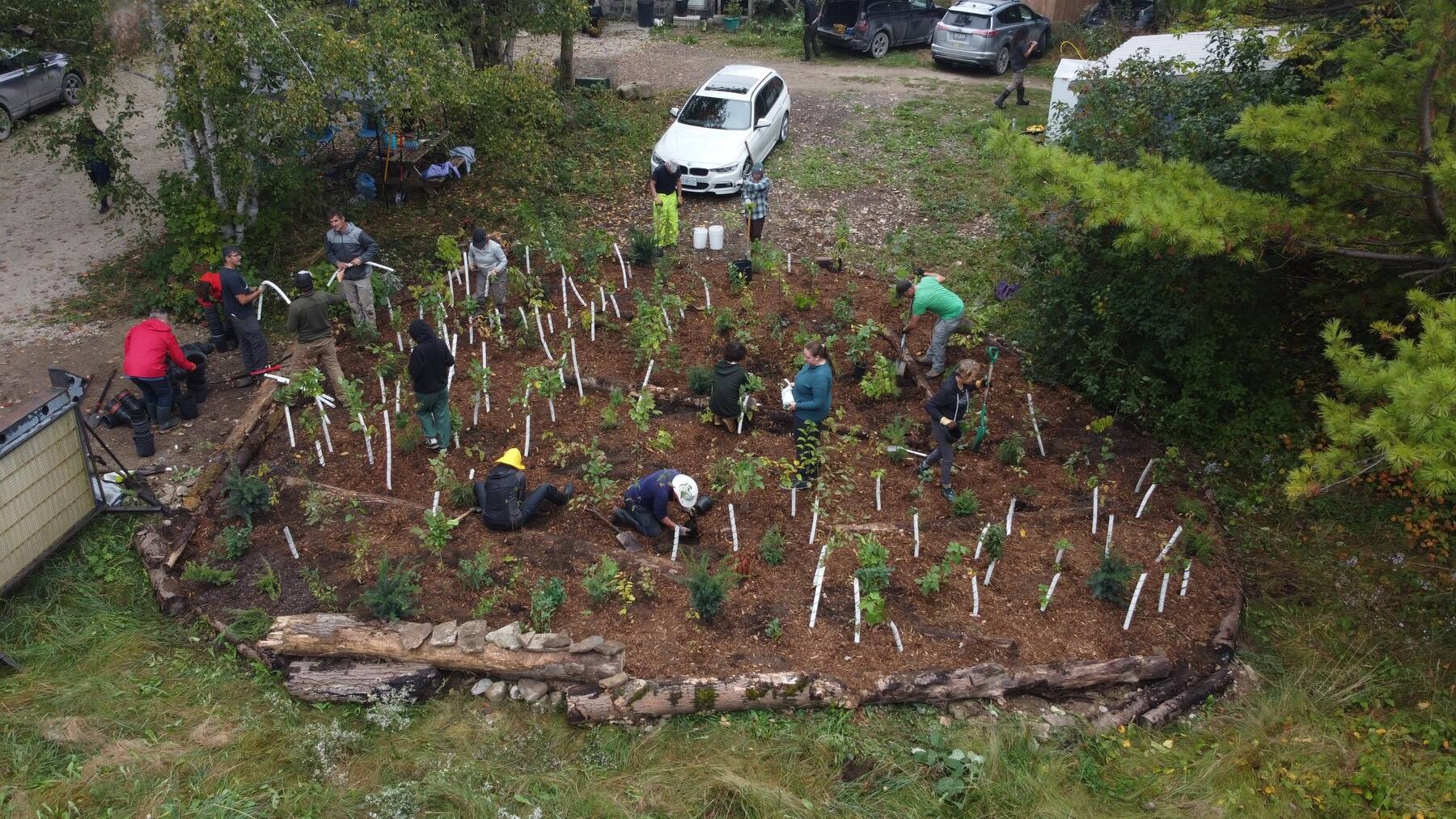
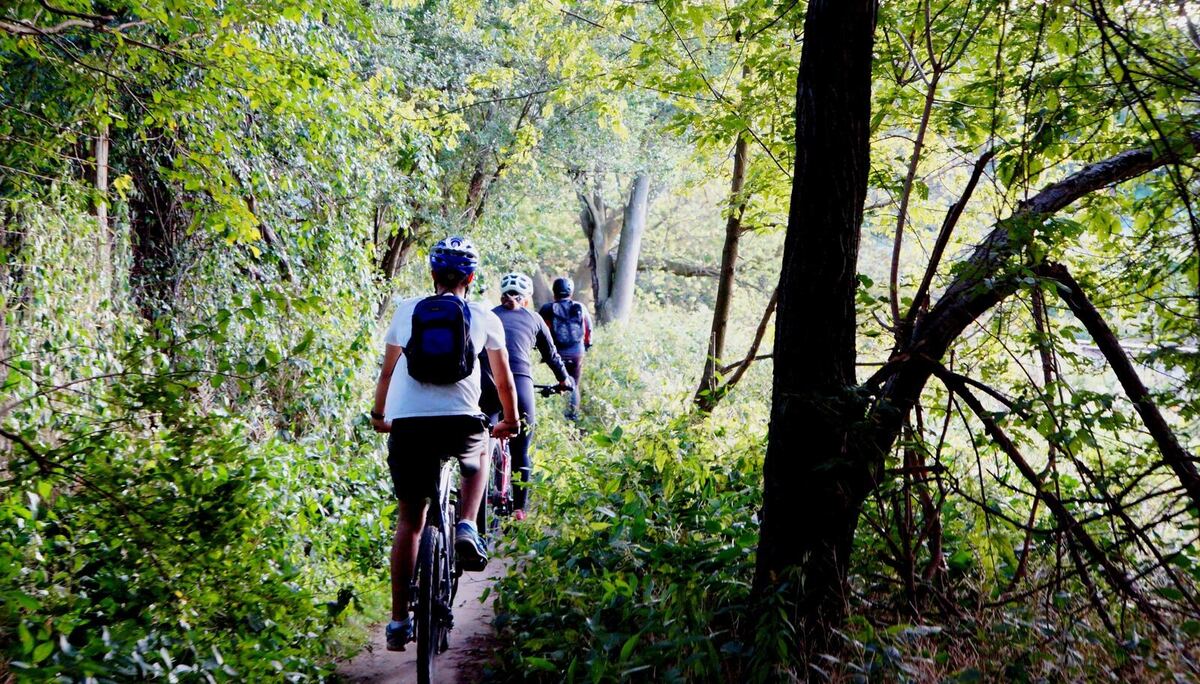
When Green Communities Canada launched their National Mini Forest Pilot program in 2022, these types of projects were still relatively new in Canada.
The organization was part of a collaborative called the Network of Nature and planted 15 pilot sites across five provinces that year. By the end of 2026, they’ll have supported 60 mini forests across Canada.
“We’re a big part of that trend, but we know that there are other organizations installing mini forests across the country,” says Jenn McCallum, Green Infrastructure Manager at Green Communities Canada. “I wouldn’t be surprised if there’s double that amount already existing in Canada.”
Why the tiny forest phenomenon?
Tiny forests—also called mini forests, micro forests and Miyawaki forests— are a community of native trees and shrubs planted closely together in an urban or suburban site based on a technique developed by Japanese botanist Dr. Akira Miyawaki in the 1970s, originally as a response to pollution and deforestation from Japan’s rapid postwar development.
“The idea behind it is to more rapidly reforest an area,” McCallum says. “If you think of a clear-cut site or a wildfire site, you get seedlings that pop up—a lot of them—but it can take decades or centuries before that site becomes a forest again. So, the idea with the mini forest is that you help accelerate that natural process using native species from the area where the site is being planted.”
Dense planting (about three to five stems per square metre) means the plants grow close together so they can connect through their roots and mycorrhizal fungi networks. This helps them share resources and support each other as they grow.
These tiny forests provide a rich habitat for wildlife, improve air quality, reduce the urban heat island effect, prevent flooding and improve health and wellbeing.
McCallum also joined the 2026 Evergreen Conference alongside Dougan Ecology to lead an activity called Designing a mini forest for urban resilience. Participants learned about the mini forest method, including its benefits, and were given a list of local native species. They then chose species from different layers of a forest—canopy, sub-canopy, understory and shrub—and used grid paper to design their own mini forest. The exercise invited them to imagine how a mini forest could look in places they know.
“People are really interested in learning about the mini forest method. Participants were really engaged and asked really good questions.”
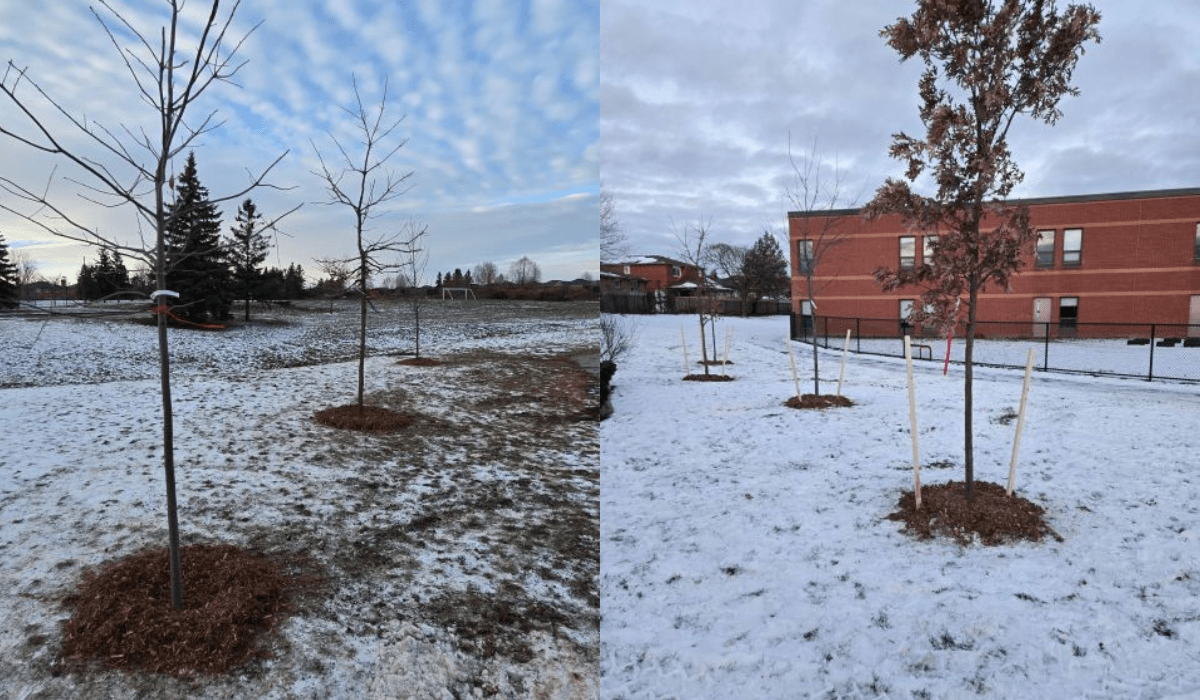
Evergreen’s school ground greening projects with The Regional Municipality of York incorporate some aspects of the Miyawaki method, including planting diverse species that grow together.
Bringing mini forests to Ontario school grounds
Evergreen has also been putting this nature-based solution into practice.
In December, in partnership with The Regional Municipality of York and York Catholic District School Board, Evergreen completed three school ground mini forest projects, using the Miyawaki method that includes planting intentional clusters of diverse species that grow together to create a gradient of ecological benefits.
The projects took place at St. Angela Merici Catholic Elementary School in Woodbridge, Ont., St. Patrick Catholic Elementary School in Schomberg, Ont., and St. David Catholic Elementary School in Maple, Ont.
These school grounds are currently underplanted, low in species diversity and lacking natural shade and gathering spaces for students. A total of 33 trees were planted in clustered formations to promote biodiversity, support native insects and birds and help establish more complex and layered ecosystems.
“These projects support the idea of outdoor classrooms—spaces shaped by natural materials and elements,” says Michael Ormston-Holloway, Evergreen’s design consultant on the projects. “There’s so much value in giving children the chance to be outside, breathing fresh air, hearing birds and crickets and connecting to the natural world in a deeper way.”
Want to make your own tiny impact?
McCallum says when it comes to environmental action, figure out what you can do within your sphere of influence.
“Learning about the mini forest method and advocating for that in community park spaces or even just advocating for tree planting to help increase biodiversity is important,” she says. “If you have a backyard, there are pocket forest kits available you can start right at home.”
But she also encourages people to simply learn about plants and get involved with plants.
“There’s so much that they can teach us. They’re so valuable for not only improving air quality, supporting stormwater infiltration and increasing biodiversity, but also for their health and wellness benefits—just having your hands in soil has benefits.”