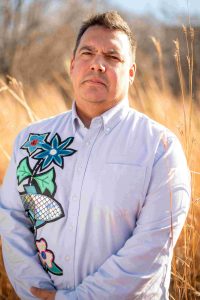
Niigaan Sinclair
As Evergreen prepares to host the Evergreen Conference on May 6–7, 2025, we are honoured to welcome Niigaanwewidam (Niigaan) Sinclair — Anishinaabe writer, professor and public intellectual — as a keynote speaker. Niigaan’s vision for the future of the country is clear: the way forward is through “an ethics of kindness” and a profound sense of duty to one another and the planet.
In a recent conversation, Niigaan spoke about how the ways we build, share and inhabit space can either repeat the failures of the past or model a more ethical and inclusive future.
“We just keep repeating the same problems over and over again.”
Niigaan began by reflecting on who leads conversations around change — and who should.
“CEOs, premiers, prime ministers, business leaders — most of whom never learned about Indigenous peoples in school – are the least capable people to implement reconciliation,” he said. “So we just keep repeating the same problems over and over again. I have tremendous hope, though. The youth are going to start investing in more ethical ways that we can talk to one another and deal with one another. My hope is that we move forward with less conflict, not more.”
That forward movement, he noted, begins with achievable, meaningful actions. “Picking some manageable, tangible solutions like boil-water advisories, housing, and infrastructure on First Nations would make a real-life difference – and it wouldn’t be that hard. If we build some success first, some momentum, we can move on to bigger projects.”
Indigenous leadership in every space
For Niigaan, reconciliation and sustainability are inseparable — and both depend on Indigenous leadership. “Every single space in this country has to be a reminder that we’re all in this together,” he said. “Whether it’s treaty education in the Prairies, the Dish with One Spoon Wampum in Toronto, or Peace and Friendship treaties in the East, public spaces should make visible the relationships that underpin this land.”
“These reminders shouldn’t be performative acknowledgements, but structural commitments”, he said. “You need to have an Indigenous person at your side for everything that you do. If you there’s no Indigenous peoples in the centre of the room when decisions are made that impact Indigenous peoples, that tells you pretty much where you’re at.”
For Niigaan, the goal is not to make people feel guilty about land redress or history, but to invite honest, sometimes difficult conversations about rebuilding relationships. “Canada’s Supreme Court recognizing unceded territory doesn’t mean Canadians lose a home,” he explained. “It means we have some work to do on rebuilding relationships that have been deeply harmed.”
Public space as a site of education and transformation
Drawing from his experience in Winnipeg, Niigaan spoke about how Indigenous communities have reclaimed spaces once designed without them in mind. “It’s fascinating to see the way Indigenous people have adopted space that wasn’t intended to be Indigenous, but people have reinhabited and recreated it. It tells you there’s a richness to that area that’s almost undeniable — almost like blood memory.”
He sees public space as a powerful classroom. “The foundation of this country, every conversation we have, begins with how we relate with Indigenous peoples and what Indigenous peoples did to build this amazing place before newcomers came. Those foundational principles are what have carried us to our greatest successes.”
Turbulence means progress
When asked about public spaces for protest and demonstration, Niigaan offered a striking reflection: “Public space is where members of the public come together to ask: who are we, why are we here, where are we going? The people most cut out of that story have been Indigenous peoples. So when we start to reimagine those spaces as shared, it’s going to be turbulent. Equity, equality and humanity is scary if one has never experienced it before, so turbulence might just be exactly what we want.”
Calmness, he warned, can actually represent silence or silencing. “The problem in this country is the status quo – the “normal” has always been undergirded by a foundation of violence against Indigenous communities. When this is interrupted things become turbulent, and then you know something really cool is going on.”
Staying in the room
Reconciliation, for Niigaan, isn’t about arriving at agreement — it’s about commitment. “Reconciliation means staying in the room and not giving up on one another. Reconciliation is easy when there’s very little stakes and is based in ornamental gestures. Reconciliation is real – and very, very hard – when we are disagreeing, for this is the time we have to be extra kind to each other and ourselves, because we’re going to make many mistakes. We can’t give up on each other.”
His philosophy of reconciliation echoes the teachings of his late father, the Honorable Murray Sinclair. “My dad would say reconciliation is simple: I want to be your friend, and I want you to want to be my friend,” Niigaan reflected. “For me, reconciliation is realizing we’re all family. We don’t always have to like each other, but we have to stay committed to each other. The good times are easy — but the bad times are when we have to double down.”
Building tomorrow, together
In the end, Niigaan’s message to city builders and community leaders is simple: stop debating why reconciliation matters, and start acting on how to live it. “We keep debating the why, and young people just want to get to the how,” he said. “Stop fooling around with acknowledgements — just make space. That’s the most Canadian thing you can do.”
The work of creating Indigenous-led and Indigenous-informed public spaces — whether in Winnipeg or Toronto — is not just about infrastructure. It’s about modelling a way of being together that honours truth, welcomes turbulence and builds the conditions for trust, collaboration, and shared belonging.
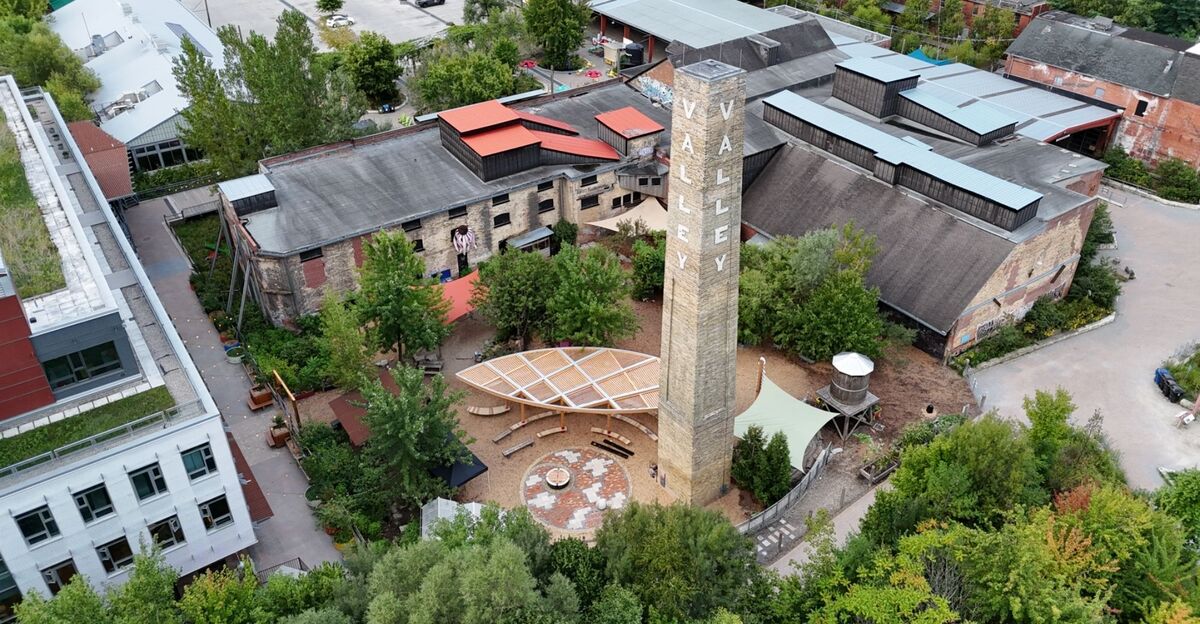
Join us May 6–7, 2025, at Evergreen Brick Works for the Evergreen Conference, where Niigaan Sinclair and other leaders in city building, policy and community development will explore how public spaces can help shape more equitable, regenerative, and connected communities.